
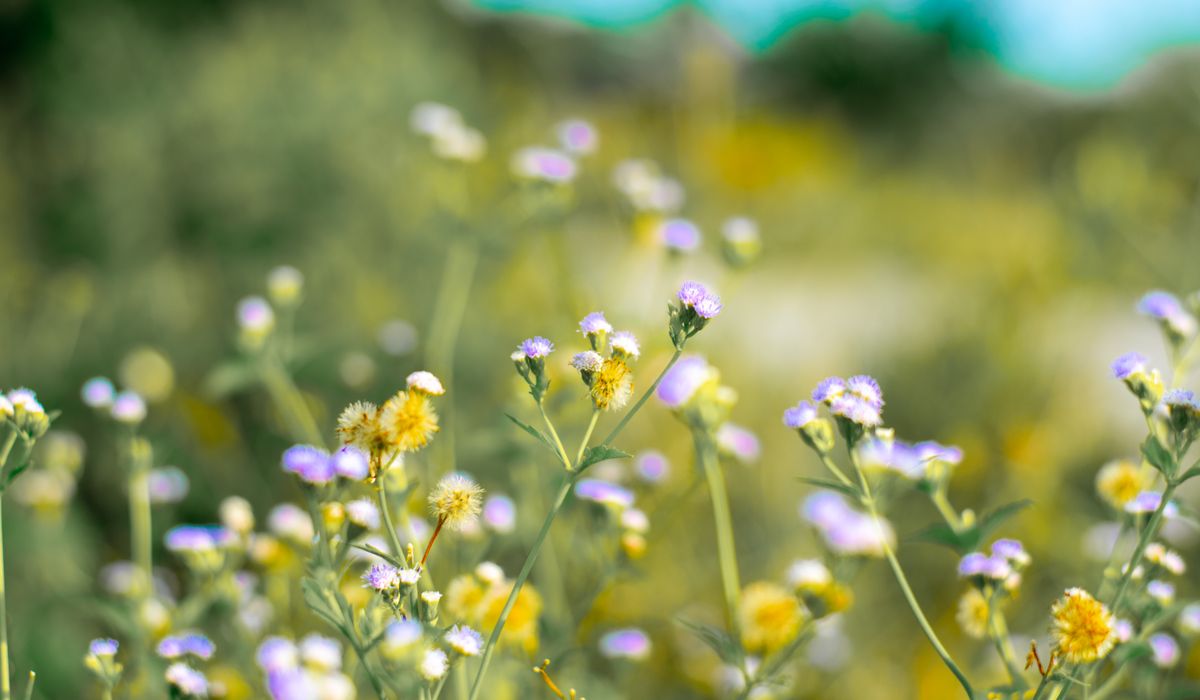
How to Create a Wildflower Meadow from Scratch
Start with the soil, not the seed
Most meadow projects fail before a single seed hits the ground, and the reason is almost always fertility. The wildflowers we love — ox-eye daisy, knapweed, birds-foot trefoil, meadow buttercup — evolved on thin, hungry soils where coarse grasses cannot dominate. Feed them and the grasses win. Every time.
So before you order anything, ask what your soil is like. If it is dark, crumbly and full of worms, it is probably too rich for a meadow as it stands. That is not a deal-breaker; it just means you will spend a season stripping fertility rather than sowing straight away. If it is pale, stony, sandy or chalky, you have won the lottery.
Clay soils can work beautifully too, particularly if you are on heavy Wealden or Midlands clay, but they hold nutrients and drain slowly. They suit a slightly different mix, so bear that in mind when you choose your seed.
Pick the sunniest, hungriest patch you have
A wildflower meadow needs light. Aim for at least six hours of direct sun in midsummer, ideally with the plot running roughly east to west so it is not shaded for long stretches. A south-facing slope is perfect; the base of a north wall is not.
Size matters less than you might think. Half a dozen square metres in a front garden can be a genuinely useful habitat if it is managed well, and a small patch is far easier to keep on top of than a scrappy hectare. If you only have a lawn, consider converting a broad strip along one boundary rather than the whole thing — mown paths and edges make a meadow look deliberate rather than neglected.
- Sun: six hours minimum in June and July.
- Soil: low fertility, free-draining if possible.
- Shape: irregular edges look better than tidy rectangles.
- Access: leave room to get a mower or strimmer in.
Clear the ground properly
Weed removal is the unglamorous middle of this job, and skipping it is the second most common reason meadows fail. Perennial thugs such as nettle, dock, couch grass, ground elder and creeping thistle will out-compete young wildflowers with ease.
Start by cutting everything down as low as you can and raking off the cuttings. Then choose your method:
- Repeated cultivation: dig or rotavate, wait three weeks for weed seeds to germinate, then shallow-cultivate again. Repeat three or four times over a season. Thorough but slow.
- Smothering: cover the plot with black polythene or a thick layer of cardboard weighted down for at least three months, ideally over a full growing season. Excellent for smaller areas.
- Turf stripping: remove the top 2–3 cm of turf and soil entirely. Brutal, effective, and it also strips fertility — often the best option on a rich old lawn.
Never use a residual weedkiller on ground you intend to sow. And do not add compost, manure or fertiliser at any stage. Meadow soil should be poor.
Choose a seed mix that belongs where you live
British wildflower seed is not one product. A mix for chalk downland in Wiltshire will sulk on acid heathland in Yorkshire, and vice versa. Buy from a supplier who asks about your soil type and location, and look for seed of British origin — native provenance matters for both wildlife and establishment.
Most mixes are sold as grass-and-wildflower blends, typically around 80 per cent grass by weight and 20 per cent flowers. The grasses are not filler; they are the structure the flowers grow through. Expect to see things like crested dogstail, common bent, sheep's fescue and smooth-stalked meadow grass alongside your flowers.
If you want colour in the first summer, sow a small proportion of cornfield annuals — cornflower, poppy, corn marigold, corncockle — alongside the perennial mix. They flower within weeks, then fade as the perennials take hold. They are a bridge, not a destination.
One more seed worth knowing: yellow rattle. This native annual parasitises grass roots and weakens them, opening space for flowers. On established grassland it is transformative. On freshly sown ground, introduce it in the second year once the sward has knit together.
Sowing: timing, rate and technique
Late August to mid-October is the ideal window, while the soil is warm and rain is on the way. Spring sowing from March to April works but establishes more slowly and may need watering if the weather turns dry. Avoid midsummer entirely.
Sowing rates are lower than people expect. For a pure wildflower mix, roughly 1–2 grams per square metre; for a grass-and-flower blend, around 4–5 grams per square metre. Weigh it out, then bulk it up with dry sand or sawdust so you can see where it lands.
Divide the seed and the area into two halves. Sow one half walking in one direction, then the other walking across it. Rake lightly, firm with a roller or by treading, and leave it. Do not bury the seed.
Managing the first year and beyond
Year one looks scruffy. Resist the urge to tidy it. Cut the whole plot once in late summer, after the annuals have set seed, and remove every cutting — the cuttings are the fertility you are trying to lose. From year two, the rhythm settles:
- Cut in late July or August once flowers have seeded, then again in autumn if growth is strong.
- Always remove the cuttings. Rake, barrow and compost them elsewhere.
- Keep a mown path through the plot for access and to show intent.
- Never feed, and never spray. Both undo the work.
Expect a slow start and a spectacular third summer. Meadows are patient things, and so must you be.
tag: Meadow Making

Eleanor Bramley Author
Clay holds moisture well, so select species such as ox-eye daisy and knapweed that tolerate heavy ground without drowning in winter.
YOU MAY ALSO LIKE

Choosing the Right Seed Mix for Clay Soil
Sep 21
10Autumn planting lets roots establish before frost, giving spring seedlings a stronger start in open ground and fewer weeds.
read more
Preparing Ground for Meadow Sowing in Autumn
Sep 15
10Learn to identify ox-eye daisies, red clover, and yellow rattle by leaf shape, flower form, and habitat on your local patch.
read moreMeadow Making
-

ERRIC CATONA
This semi-parasitic annual reduces vigorous grasses, making room for delicate wildflowers in a new meadow. Sow it fresh in autumn.
May 19, 2016 at 5.12 pm
Reply
ERRIC CATONA
Wait for dry seed heads, collect on a sunny afternoon, and store in paper bags away from damp.
May 19, 2016 at 5.12 pm
Reply -
ERRIC CATONA
Crested dogstail, sweet vernal grass, and meadow foxtail offer structure and food for insects without dominating a small plot.
May 19, 2016 at 5.12 pm
Reply
Wildflowers
Your email address will not be published.