
The Real Deal Behind iGaming: Slots, Poker, and Sports Betting
You’ve seen the ads: a grinning guy in a suit holding a giant check, a roulette wheel spinning in slow motion, a poker player staring down an opponent. The iGaming industry is loud, flashy, and relentless. But strip away the marketing hype and there’s a fascinating, complex ecosystem underneath. Whether you’re a casual slots spinner, a poker grinder, or someone who likes a flutter on the weekend, understanding how this world actually works changes the game. Let’s cut through the noise.
Slots: The Engine That Never Sleeps
Slots are the cash cow of online casinos. They’re simple to play, require zero skill, and can pay out life-changing sums from a 50-cent spin. But not all slots are created equal. The key number you need to know is RTP (Return to Player). This is the theoretical percentage of all wagered money that a slot pays back to players over millions of spins. A 96% RTP slot returns $96 for every $100 bet, on average. The house edge is the other 4%.
But RTP alone doesn’t tell the whole story. Volatility (or variance) matters just as much. Low-volatility slots pay small amounts frequently—think $2 here, $5 there. High-volatility slots are like a desert with occasional thunderstorms: long dry spells followed by massive downpours. If you have a $50 bankroll and you’re playing a high-volatility slot with a $1 spin, you might lose it all in 20 minutes. That’s not bad luck; it’s math.
Here’s a concrete example: Starburst (NetEnt) has an RTP of 96.1% and low volatility. You’ll get frequent small wins, but huge payouts are rare. Compare that to Book of Dead (Play’n GO) with 96.2% RTP but high volatility—you can go 100 spins without a win, then hit a 5,000x multiplier. Neither is “better.” They suit different temperaments and bankrolls.
- Tip: Always check the RTP and volatility before you play. Casinos often hide lower-RTP slots (like 92%) in the lobby.
- Myth buster: Slots don’t “heat up” or “go cold.” Each spin is independent thanks to a random number generator (RNG).
Poker: Where Skill Eats Luck for Breakfast
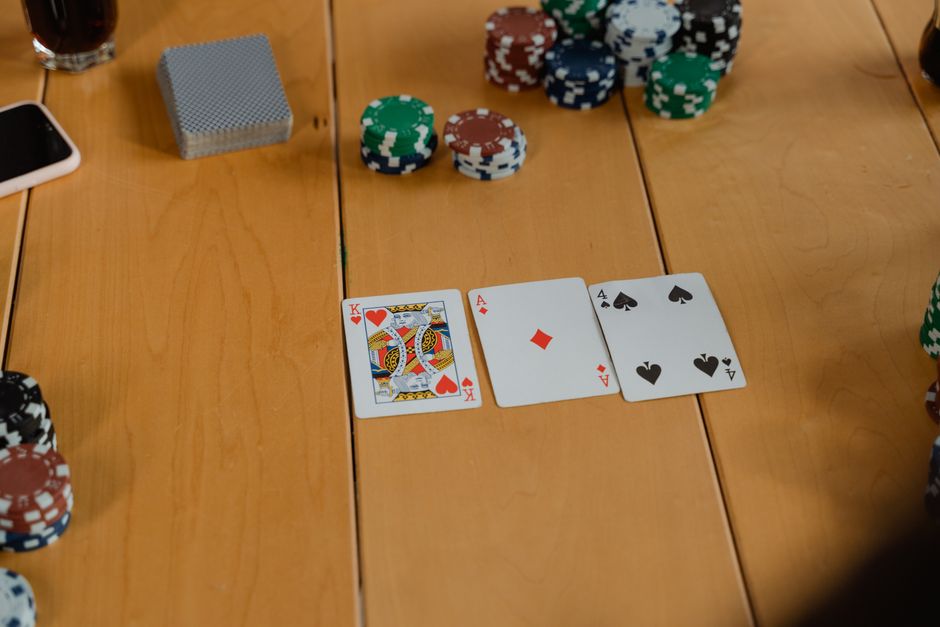
If slots are a lottery ticket, poker is a chess match with money. Online poker rooms like PokerStars, GGPoker, and partypoker host millions of hands daily. The game’s beauty is that you play against other people, not the house. The casino takes a small cut (the rake) from each pot, typically 2.5% to 5%, capped at a few dollars.
But here’s the uncomfortable truth: most online poker players lose. Not because the games are rigged—they aren’t—but because the skill gap is brutal. A professional can crush low-stakes games ($0.01/$0.02 blinds) for 10 to 15 big blinds per 100 hands. A recreational player who calls too much and bluffs randomly will bleed chips. saowin.za.com offers a practical breakdown of the topic.
What separates winners from losers? Three things:
- Position. Acting last gives you information. You play fewer hands from early position and more from the button.
- Bankroll management. Never buy into a cash game with more than 5% of your total poker bankroll. For tournaments, it’s 2%.
- Range thinking. Stop guessing what one opponent has. Think in ranges: “He raises from early position, so he likely has A-A, K-K, Q-Q, A-K, or A-Q.”
One more thing: online poker is fast. You’ll see 60 to 80 hands per hour per table, compared to 25 to 30 live. That means more decisions, more edges, but also more variance. If you tilt easily, set a stop-loss of two buy-ins per session.
Sports Betting: The Line Is Smarter Than You
Sports betting has exploded since the U.S. Supreme Court struck down the federal ban in 2018. Now you can bet on everything from the Super Bowl to whether a specific player will get a yellow card in a Premier League match. But here’s the hard truth: the odds are set by sharp bookmakers and algorithms that know more than you do.
Take a simple point spread. If the Chiefs are -7 against the Raiders, the bookmaker is saying the Chiefs are seven points better on a neutral field. The odds are usually -110 on both sides, meaning you bet $110 to win $100. That 10% vig (vigorish) is the book’s profit. To break even, you need to win 52.4% of your bets. Most casual bettors win 48% to 50%.
Does that mean you can’t win? No. But you need an edge. That might be:
- Line shopping. Different books offer different odds. A half-point difference on a spread can turn a loss into a push or a win.
- Prop bets. Sometimes player props (like “over 2.5 receptions”) are softer than game lines because books put less effort into them.
- Live betting. In-game odds shift rapidly. If you’re watching a game and see a team dominating but trailing on the scoreboard, live odds might offer value.
But never bet on your favorite team just because you love them. Emotion is the fastest way to the poorhouse.
Bonuses: The Good, the Bad, and the Ugly
Every iGaming site screams about welcome bonuses: “100% up to $500!” or “50 free spins!” But read the fine print. Most bonuses come with wagering requirements. A $100 bonus with a 35x wagering requirement means you must bet $3,500 before you can withdraw any winnings. And not all games count equally—slots might count 100%, but blackjack might count 10%.
Some bonuses are genuinely useful, like deposit matches with low wagering (10x or less) or no-wagering free spins. Others are traps designed to keep you playing until you lose it all. My rule: never take a bonus with a wagering requirement above 30x unless you’re confident you can clear it.
The Future: Faster, Smarter, More Regulated
iGaming is evolving. We’re seeing the rise of crypto casinos (which offer provably fair games but less regulation), skill-based slots (where you can influence outcomes), and AI-powered poker bots (which are banned but still exist). Meanwhile, regulators are cracking down on unlicensed sites, and markets like the U.S. are opening state by state.
For players, the smartest move is to stick with licensed, regulated operators. They might offer slightly worse bonuses, but they pay out reliably and their games are audited. An unlicensed casino in Curaçao might have a 98% RTP slot—but good luck withdrawing $10,000.
Final Thought: Play the Player, Not the Game
After years in this space, I’ve learned that the iGaming world rewards discipline, not luck. The slots don’t care about you. The poker table doesn’t care about you. The sportsbook definitely doesn’t care about you. What matters is understanding the math, managing your bankroll, and treating every bet as a calculated decision—not a hail mary. Whether you’re spinning reels, bluffing a river, or betting the over, the house always has an edge. Your job is to make sure that edge is as small as possible. And if you can’t do that, at least have fun. Because the moment it stops being fun, you’ve already lost.
tag: iGaming

Eleanor Bramley Author
Clay holds moisture well, so select species such as ox-eye daisy and knapweed that tolerate heavy ground without drowning in winter.
YOU MAY ALSO LIKE

Choosing the Right Seed Mix for Clay Soil
Sep 21
10Autumn planting lets roots establish before frost, giving spring seedlings a stronger start in open ground and fewer weeds.
read more
Preparing Ground for Meadow Sowing in Autumn
Sep 15
10Learn to identify ox-eye daisies, red clover, and yellow rattle by leaf shape, flower form, and habitat on your local patch.
read moreMeadow Making
-

ERRIC CATONA
This semi-parasitic annual reduces vigorous grasses, making room for delicate wildflowers in a new meadow. Sow it fresh in autumn.
May 19, 2016 at 5.12 pm
Reply
ERRIC CATONA
Wait for dry seed heads, collect on a sunny afternoon, and store in paper bags away from damp.
May 19, 2016 at 5.12 pm
Reply -
ERRIC CATONA
Crested dogstail, sweet vernal grass, and meadow foxtail offer structure and food for insects without dominating a small plot.
May 19, 2016 at 5.12 pm
Reply
Wildflowers
Your email address will not be published.