
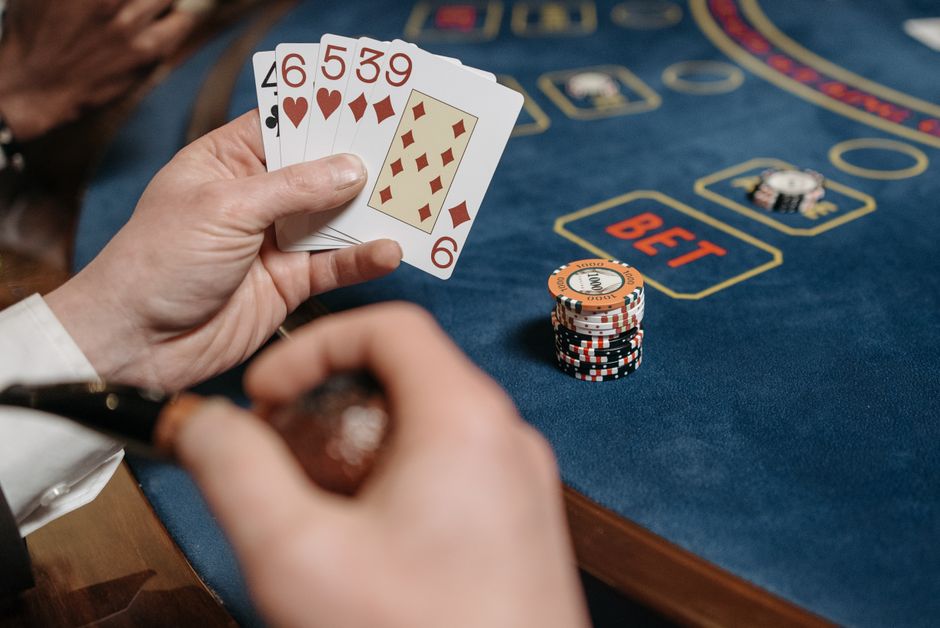
The iGaming Edge: How Smart Players Approach Casino, Betting, Slots & Poker
You’ve seen the flashy ads. The bonus offers that promise the moon. The streamers hitting jackpots. But behind the neon curtain, iGaming is a game of math, psychology, and discipline—and most players never learn the rules. Whether you’re spinning slots, grinding poker tables, or trying to beat the bookies, the difference between a hobby and a hemorrhage is knowledge. Let’s cut through the noise.
Slots: More Than a Pretty Spin
Slots are the casino’s cash cow, contributing 60–80% of revenue in most jurisdictions. That’s not because they’re generous—it’s because they’re fast, immersive, and mathematically predictable for the house. Every spin is independent, driven by a Random Number Generator (RNG). But not all slots are created equal.
First, understand RTP (Return to Player). A slot with 96% RTP pays back $96 for every $100 wagered over millions of spins. That 4% house edge might seem small, but with 600 spins per hour at $1 each, you’re theoretically losing $24/hour. Choose slots with RTP above 96%—they exist. Blood Suckers (98%), 1429 Uncharted Seas (98.6%), and Mega Joker (99% in some modes) are classic examples.
Volatility is the other lever. High-volatility slots (like Bonanza or Dead or Alive 2) pay rarely but hugely; low-volatility ones (like Starburst) pay often but small. Your bankroll and patience should dictate which you choose. A $100 bankroll on a high-volatility slot might vanish in 20 minutes—or triple. On a low-volatility game, it could last hours with slow bleeding.
Tip: Always check the paytable. If the top prize is 500x your stake, it’s low volatility. If it’s 50,000x, buckle up.
Betting: The Bookmaker’s Margin and How to Beat It
Sports betting is not gambling in the pure sense—it’s pricing. Bookmakers set odds to guarantee a profit regardless of outcome, via the overround (vigorish). A typical NFL point spread might have both sides at -110. That means you must bet $110 to win $100. The implied probability of each side is 52.4%, summing to 104.8%—the extra 4.8% is the bookie’s edge. keonhacaii5.com.co offers a practical breakdown of the topic.
To win long-term, you need to find value bets: where your estimated probability of an outcome is higher than the implied probability from the odds. This is hard, but not impossible. Sharp bettors focus on:
- Line shopping: Different books offer different lines. Betting the best price on every wager can add 2–4% to your ROI.
- Promotions: Free bets, odds boosts, and risk-free wagers are essentially +EV if used correctly.
- Niche markets: Player props, lower leagues, and esports often have softer lines because bookmakers allocate fewer resources to them.
But don’t fall for the gambler’s fallacy: a team on a 10-game losing streak isn’t ‘due’ for a win. Each match is independent. Data, not gut, wins.
Poker: The Only iGaming Game with a Long-Term Edge
Poker is unique: you play against other players, not the house. The casino takes a rake (typically 5% up to $3 per pot), but a skilled player can overcome it. The key is opponent selection—find tables with weak players (fish) and avoid regs.
If you’re serious, learn pot odds and equity. Example: You have a flush draw on the flop (9 outs). The pot is $100, and your opponent bets $50. You need to call $50 to win $150, so pot odds are 3:1. Your odds of hitting the flush by the river are roughly 35% (about 1.86:1). Since pot odds (3:1) are better than card odds (1.86:1), it’s a profitable call—if you’ll see both cards. But if you’re only seeing the turn, your odds drop to ~19% (4.2:1), making the call incorrect.
Most beginners play too many hands. Tighten up: in a 9-handed game, play only the top 15–20% of starting hands from early position. Position is power. The button is the most profitable seat.
Bankroll management matters: never buy into a cash game with more than 5% of your dedicated poker bankroll. For tournaments, keep it to 2% or less.
Bankroll Management: The Silent Killer of iGaming Dreams
Even a winning strategy fails without discipline. A common rule: your betting unit should be 1–2% of your total bankroll. For slots, set a session loss limit (e.g., $50) and a win goal (e.g., $100). Walk away when you hit either.
Here’s a concrete example: You have $500 for iGaming. Allocate:
- $200 for slots (low volatility, 96%+ RTP)
- $150 for sports betting (flat bets of $5–$10)
- $100 for poker tournaments (buy-ins of $2–$5)
- $50 buffer for reload bonuses or unexpected value
Never chase losses. The house edge doesn’t care about your feelings. If you’re tilting—angry, desperate, or drunk—stop. The best players know when to quit.
Bonus Terms: Where Casinos Hide the Truth
Welcome bonuses look great: ‘100% up to $500!’ But read the fine print. A 40x wagering requirement means you must bet $500 × 40 = $20,000 before withdrawing. If the slot contributes 50% to wagering, you’d need $40,000 in spins. At a 4% house edge, you’d lose $1,600 on average—more than the bonus.
Look for:
- Low wagering (under 30x)
- High game contribution (100% for slots, not 10%)
- No max cashout clauses (some limit winnings to $100)
- Reasonable time limits (30+ days)
If the terms seem too good, they are. A ‘free’ $10 no-deposit bonus with 60x wagering is nearly impossible to clear. Treat bonuses as entertainment, not income.
The Bottom Line: Treat iGaming Like a Business
Casinos, bookmakers, and poker rooms are not charities. They’re entertainment venues with a built-in edge. The only way to win long-term is to exploit soft spots: value bets, weak poker opponents, and high-RTP slots. For everyone else, it’s a paid hobby.
So set limits, track your play, and never bet what you can’t afford to lose. The thrill is real—but so is the math. Respect both, and you’ll enjoy the ride without the regret. Remember: the house always has an edge, but with discipline, you can at least keep it small.
tag: iGaming

Eleanor Bramley Author
Clay holds moisture well, so select species such as ox-eye daisy and knapweed that tolerate heavy ground without drowning in winter.
YOU MAY ALSO LIKE

Choosing the Right Seed Mix for Clay Soil
Sep 21
10Autumn planting lets roots establish before frost, giving spring seedlings a stronger start in open ground and fewer weeds.
read more
Preparing Ground for Meadow Sowing in Autumn
Sep 15
10Learn to identify ox-eye daisies, red clover, and yellow rattle by leaf shape, flower form, and habitat on your local patch.
read moreMeadow Making
-

ERRIC CATONA
This semi-parasitic annual reduces vigorous grasses, making room for delicate wildflowers in a new meadow. Sow it fresh in autumn.
May 19, 2016 at 5.12 pm
Reply
ERRIC CATONA
Wait for dry seed heads, collect on a sunny afternoon, and store in paper bags away from damp.
May 19, 2016 at 5.12 pm
Reply -
ERRIC CATONA
Crested dogstail, sweet vernal grass, and meadow foxtail offer structure and food for insects without dominating a small plot.
May 19, 2016 at 5.12 pm
Reply
Wildflowers
Your email address will not be published.